Wednesday, September 5, 2018

A Time of Crisis and Opportunity: A Look at China’s Nonprofit Sector in 2018


 Shanghai, China

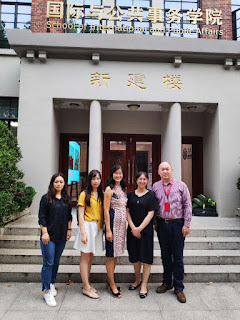
Away from the bustling Central Business District in Pudong and the grandeur of the Bond, Shanghai Jiao Tong University (SJTU) nestled in the relatively quieter district of the former French Concession with its colonial charm and walled streets lined with London plane trees.   SJTU is one of the oldest universities in China established in 1896 and has been known as “the MIT of the East” since the 1930s.  It is here, in December 2016, an Institute for Philanthropy Development was established, a first of its kind to provide professional guidance for charity organizations right after China’s first charity law coming into effect in September that same year.  Therefore, it was quite an honor for me to be invited to the SJTU campus on a hot July day by the Institute for Philanthropy Development and Chinese Association for Fundraising Professionals (CAFP) as the first guest speaker, on Canadian Fundraising Landscape and Trends, for its “Money Talk and Tea” series, a networking and learning session for local fundraisers. 

China’s philanthropy sector hit another growth spur after the implementation of the charity law in 2016.  Government dominance in the sector were diversified by more and more private foundations.    However, it continues to struggle with public trust issues even after consolidating internet fundraising to only 13 online platforms.  In December 2017, a unique campaign called “Same Birthday” went viral and raised over RMB2 million just over couple of days.  Through the Tencent Wechat (Chinese equivalent of Facebook) platform, the campaign asked donors to donate RMB1 yuan to support a child on the same birthday of donor.  366 children was chosen to be sponsored from Zhen Xiong County in rural Yunnan Province.  Donors could view the information of the sponsored children.  Soon, some donors found same photos of children posted for different birth dates and a child’s birthday was advertised as February 29 which did not exist.  Within a week, controversy snow-balled.  Public was not only questioning incorrect information but also donation fund management and privacy violation for the children featured in the campaign. A much “commercialized” successful fundraising campaign exposed many aspects of ethical concerns for the fundraising community and an urgent need to address them. 

Before our “Money Talk and Tea” (MTT) session, I met with David Sun, Assistant to the Dean of Institute for Philanthropy Development at SJTU and Erin Ye, Secretary for Chinese Association for Fundraising Professionals for lunch.  “Have you heard about the Metoo thing and perhaps we should talk about how Canadians are dealing with it this afternoon”, Erin asked me.   As lunch progresses, I learned that there had been a series of sexual harassment allegations of well-known leaders, or as some called pioneers in the nonprofit sector.  The public generally had higher expectations for the nonprofit sector so people are truly worried that the image of sector was tarnished. 

As a “tourist” visiting families in China, I have never heard about this on the news, keeping in mind that news was limited to Chinese censored news only on all channels.  No foreign news reports and websites like facebook or even google could get through the Chinese internet firewall.  I soon realized that with Chinese media censorship, true information could now flow through public media. Rather, information went around on Weibo (Chinese equivalent of Tweeter) and Wechat among circles of “friends”.  Even these channels were eventually censored.  By the end of the lunch, Erin told everyone that the government already started deleting posts on the sexual allegations, only two days after the first news broke.   

“The Metoo thing will set us back for years on public trust”, Erin worried.   I wasn’t sure how to respond.  In Canada, the nonprofit sector was not represented by a few people but an array of charitable organizations.  Nonprofit leaders are often less known by public hence the sector bears little risk if someone is exposed by Metoo movement.  It is obvious that the Chinese public puts nonprofits in more scrutiny then anywhere else.   

Beijing, China

There is no doubt that the nonprofit sector in China is facing a public trust crisis.  Just a few days before the Shanghai MTT session, I was invited to attend a group discussion in Beijing by nonprofit leaders, academics on philanthropy, foundation funders and law makers on Chinese Fundraising Ethics.  The discussion was based on the newly published AFP International Statement of Ethical Principles in Fundraising.  It’s great to see that the AFP document was used as a guiding principle and a base to shape the ethical statement for a burgeoning new nonprofit industry.  I feel truly proud to belong to a group of professionals whose experience and best practice could help in advancing philanthropy in other parts of the world. 

Three problems out of many stuck out for me from the discussion. First, although the Statement of Ethics was used as a self-disciplinary principle for individual fundraisers, it inevitably needed to be adapted as a recommendation for nonprofit organizations in China as many unethical behaviors were conducted on an organizational level.  For example, commission-based compensation was still an acceptable practice by some Chinese nonprofits not realizing such practice would undermined organizations in the long term.  It was also common that political parties were pressuring party members to make donations.  Second, there were many gaps in law that related to fundraising practices.  Tax receipt existed but because Chinese citizens didn’t do tax themselves, rather it was done by employers, many donors did not see their tax deductible applied due to the lack of knowledge from the finance department of employers.  There was also no mechanism to encourage financial transparency on costs and reporting.   Last but not the least, there was a need to have some ethical standard for some donors and beneficiaries to eliminate possibility of personal gain as a result of fundraising activities including publicized pledges that’d gone unfulfilled or using donation as a way of transferring fund among family members. 

Shanghai, China

The first MTT talk was successful.  Some thirty fundraising professionals showed up to learn about Canadian Fundraising.  To my surprise, the usual “biggies” i.e. Universities and hospitals were not there at all nor in any other CAFP events according to Erin and David.  Hospitals creating foundations to fundraise for themselves seemed to be unheard of or even frowned upon.  “Secondary education institutions don’t consider themselves to be charities”, David informed me, “they rarely look beyond their own alumni”.  Funded mostly by the government, Arts organizations also weren’t charities.  Similar to the session I did in Beijing, most attendees were from foundations.  Perhaps in China, most of the philanthropy came from wealth and originated from funders looking for needs instead of grassroots organizations.  This top-down approach presents a unique problem: fundraisers are not passionate about the cause, sometimes not knowing what is the “cause of the day”. 

Calgary, Canada

At the end of August, I received the first draft of China’s first Statement of Ethics in Fundraising practices as result of our July discussion.  It not only included a statement for fundraisers but also provided ethical recommendations for nonprofit organization itself, internet fundraising platforms, donors and beneficiaries. A second MTT talk was held last week with fundraising professionals sharing experience in preparation of the Tencent 99 Giving Day coming up on September 9, a successful online giving campaign equivalent to Giving Tuesday.  With a small but very dedicated group of professionals, China’s nonprofit landscape is changing fast.  Despite censorship and government control, Chinese fundraising professionals are able to push philanthropy forward and make a difference in the governance and legislation of the nonprofit sector.  Perhaps there is hope for democracy in the space of civil society. 


At home in Canada, Crazy Rich Asians is all the rage.  As a fundraiser, I see wealth as an opportunity for philanthropy.  Asia is certainly becoming the next wealth centre of the world.  It was exciting to observe and experience the ups and downs of an emerging nonprofit sector but more fulfilling to participate and feel a sense of responsibility to nurture and encourage a culture of philanthropy and a consensus for ethics and best practices.   


Melody Song MA CFRE
Originally from Beijing China, Melody Song has over 15 years of experience as a fundraiser specializing in identifying, cultivating, and soliciting major gifts from and stewarding relationships with prospects of the Asian/Chinese community in Canada and overseas.  Melody is a former board member of Association of Professional Researchers for Advancement (APRA), a member of Association for Fundraising Professionals (AFP), and a frequent presenter at AFP Calgary Chapter, APRA Canada, and APRA International.  Melody is fluent in Mandarin and English.  

Thursday, May 5, 2016

Brushing Shoulders with China's Nouveaux Riche

The dinner was in a private dinning room on the third floor with high ceilings and grand windows looking out to the dancing lights of downtown- a jungle of glass towers and pedestrian streets bustling at all hours in this massive urban capital of one of China's most populated provinces.  Above the enormous round table that sits twenty was a beautiful modern chandelier which sets the quiet but extravagant tone of the whole decor. The room also came with a private bathroom, bar, and a team of waiters.  Our host, Mr. Zhang was a successful local entrepreneur, impeccably dressed at all time, humble and soft-spoken.  An event had brought us together and we had been enjoying his hospitality for the past day. Although we had organized the main event of the day, our host had assumed the responsibility of taking care of every aspects of our stay simply because he was from the region and despite that we had only met him the night before.  Our transportation was taken care of with a convoy of one mini-bus and three SUVs.  Surely, we had other families in the group that had come to enjoy the same event but each family also brought their assistants hence the need for staff to follow the main group and make necessary arrangements just ahead of us.  We also had an English-speaking tour guide who had hand-made signs for the group and introduced local culture and architecture while we toured the main attractions of the city (another arrangement by our host that came up as a complete surprise to us).   A guest in the group, Mr. Wang, who flew from another city to join us for the one-day event had brought his own wines for the occasion selected from his 20,000 bottle collection back home: three whites and three reds, two of which were on the top 100 wine list in the world.  Wine connoisseurs were rare in China as the banquets in the country were still dominated by shots of pure liqueur or beers.  Mr. Wang made a fuss about how the waiter poured the wine (in shot style) and how some of the Chinese dishes (like soup) and drinks (like almond milk) would disrupt the pallets.  The food was exquisite.  We hadn't even looked at the menu but we had been accustomed to the fact that most Chinese banquet's menu was pre-selected in advance by our host's assistant.  

The President of my organization and myself were on a four-city, two-week trip in China.  I had built an aggressive schedule around a conference that the President needed to attend.  We had meetings in every city with possible connectors and with two groups of wealthy individuals including this one through the connection of a parent from a private school in Canada.  Like our host Mr. Zhang, the men in our group were all successful Chinese businessman with families living in Canada.  Mr. Zhang was a university graduate in the late 1980s.  China had just gone through the economic reform when private properties and businesses were allowed in the country for the first time since 1949.  After working for a few years in state-owned factories like everyone else, Mr. Zhang took the plunge ("Xia Hai" as it was called in Chinese, literally meaning "jumping into the sea"), quit the government job (which was perceived to be risky and radical in a negative way back then) and became an independent product distributor and entrepreneur.  It was a typical story for China's new class of Nouveau Riche consists of people the like of Jack Ma.  Unlike Jack Ma though who was an English teacher before making it big, the entrepreneurs we met spoke very little English even with families living overseas mainly to obtain resident status.  As it was a Chinese custom to make toast and empty your glass individually with everyone around the table, I had to interpret for my President for the most of the time.  As wine flowed,  we were able to have some of the people we met promise to come and visit us in Canada during one of China's major holidays (the time when Dads visit their families overseas).  Great, another engagement opportunity!  However, will the extravagance and generosity that overwhelmed us translate to philanthropy?  We will have to see.

As a prospect researcher turned fundraiser, I had heard so much about China's new rich that I was so thankful for this first-hand prospecting opportunity.  One of the biggest realization that dawned on me when I was there was that while universities were leading the charge on getting more money from mainland Chinese philanthropists, the majority of the children of the new rich are still young between eight and fifteen. They won't reach university age for another while.  The matter of the fact is that there is no old money in China (private property was illegal before the 1980s remember).  Everyone we met was between the age 40 to 55 and had children late in their life (because China's one-child policy which also encouraged people to marry late and have children late).  

I also noticed that the wealthier our prospects were, the more and higher government title they had.  Most business cards had regional CPCCC (Community Party of China Central Committee) title listed first.  We had some success in fundraising from Chinese State-Owned Enterprise (SOEs) locally through good "Guanxi" (connections) with the Chinese consulate.  I have now reached the conclusion that if you want to fundraise in Mainland China, there is no getting away from maintaining a good and meaningful relationship with the Chinese government as it could help even with individual prospects.  

While we still need to see if the generosity we experienced would turn into dollars for a zoo (where I work), it certainly did for the private schools that the kids were attending.  Since Chinese culture held good education as a crucial criteria for creating a good life for oneself, China's wealthy class would do anything including donating six-figure major gift to get their children "the best" education.  For an educational institutions looking to raise fund from this group, having a good ranking (Ivy league preferred!) is a must. Chinese mainland donors are also not as sophisticated as North American or even donors from Hong Kong, Taiwan or Singapore.  The motivation was less passion for a cause but rather stemmed in the desire to be more socially acceptable, create better relationship, and in the buddhist essence of kind and generosity.  Value alignment and passion definitely come second after their relationship with you.  Just like doing business in China, Chinese like to be friends first even outside of work.  If you are planning your first trip to China,  you should put"making friends" as the first priority as oppose to "socializing the case for support for your organization" or "asking for help".  Everything should be done in a more casual (as oppose to business-like) approach.  Another motivation of giving is simply an attitude of "because I can" or a form of "show off".  I have heard once that philanthropy was compared to luxury goods for Asian donors which made a lot of sense to me after our experience.  Again, who gets the donation depends on the relationship with the potential prospects.  

As dinner was coming to an end, Mr. Zhang's assistant stood up and did a presentation of gifts for each member of the group.  It was obvious that he had put lots of thoughts into it.  The gifts include a pair of art works of traditional embroidery unique to the region and a selection of products from Mr. Zhang's company.  In comparison, our gifts - pins the shape of Canadian animals and maple-wood letter openers,  seemed so small, almost embarrassing.  Luckily, earlier in the day, our Chinese partner had presented a gift bag of customized memorabilias of our day's experience which we felt had made up for it.  Gifting is just as big an item as toasting in a typical Chinese banquet.  Even when planning business meetings, one of our connector had asked me if there should be a gift exchange ceremony. There were definitely times when the hospitality and the gifts were a little too extravagant for the North American comfort level, however, coming from a Chinese cultural background,  I understood that it was important that we honored the host by gracefully accepting them.  


A few days later, we arrived in Shanghai and went to the famous Bund - waterfront area with older financial district on one side of the river and the skyline of the new CBD Shanghai on the other side.  Even on a November week evening, the promenade by the river was full with people.  Streets by the waterfront were lined with luxury brand-name stores.  Skyscrapers from the other side formed a dazzling light show not unlike scenes from futuristic movies such as the Blade Runner and the Firth Elements.  For a while, it felt like you are in the centre of the world.  An old couple walking by us looked at the scene with true wonders in their eyes.  Perhaps in their 60s,  they were still both dressed in the Mao suites - a remnant of the communist days.  Born in the 70s and already went through the economic reform myself that had transformed the economical, political, and geographical landscape of China completely,  I could only imagine the kind of changes that they had experienced.  On the other hand, my experience of the wealth in China was just as surreal.  It is a country that is still undergoing rapid changes. The wealth is new, philanthropic practices are newer.  There are just as many challenges as opportunities.  As we are excited with the possibilities the new Chinese dream presents, we should fist have a solid understanding of the language, the culture, and how people connect in this society as well as how they relate to our society at home.  

Friday, June 27, 2014

White Paper Reveals Key info on Chinese HNWI and UHNWI living in US and Canada

Summary of the Visas Consulting Group – Hurun White Paper:
Immigration and the Chinese HNWI 2014
June 6, 2014 Shanghai

Translated & Summarized by Melody Song based on the Media Release on June 6, 2014

From March 2014 to April 2014, Hurun Report and Visas Consulting surveyed a total of 141 high net worth individuals (HNWI) in various major cities around China. The average wealth of respondents was 42 million RMB (CAD$7 million).  The report reveals for the first time insights on motivation, destinations, and other circumstances related to the decision to apply under the investment immigration program outside of China. 

Key findings of the report are as follows:
On Immigration:
  • Quality education for children (21%), clean environment (20%) and food safety (19%) are top three motivations for Chinese HNWI to immigrate.
  • The US is top immigration destination for Chinese HNWI followed by Canada despite of the changes in immigration law.   Los Angeles, San Francisco and Vancouver are top three municipal destinations for Chinese HNWI.
  • Top reasons to choose US include: easy to get resident status, simplification of the immigration process; top reasons to choose Canada include: easy to get resident status, connection with friends and family who are already there.
  •  Respondents’ average immigration investment is 5 million RMB (just under CAD$1 million)

On Overseas Investment
  •  Real estate has the largest proportion in Chinese HNWI’s overseas investment portfolio with 43% followed by fixed income (17%) and shares (13%).
  • Los Angeles, San Francisco and Vancouver are top three destinations for real estate investment.  40% chooses to invest in single family residence and close to 50% chooses education district. 
  • Immigration destinations for Chinese billionaires according to the Hurun Billionaire list 2014 are: 41 to USA whose combined net worth is 9% of total American’s top rich list; 7 to Canada whose combined net worth is 20% of total Canadian top rich list.
  • Top 3 study abroad destinations for high school & below are: UK (29%); US (26%); Canada (12%).
  • Top 3 study abroad destinations for post-secondary & above are: US (36%); UK (25%); Australia (11%).  Canada is #4 at 8%.
-         Average age for Chinese billionaire respondents’s children to be sent abroad for education is 16.

Monday, June 16, 2014

New Era of Philanthopy in China

Published as "Philanthropy in China" on AFP e-wire June 11
by Melody Song MA, CFRE

In April this year, Jack Ma (a mainland Chinese native), founder of the Chinese B2B e-commerce website Alibaba, announced that he will set up a personal foundation (in addition to the Alibaba Charitable Foundation) funded by 1 percent of his stock options in the company.

Alibaba is set to go public in North America with an estimated market cap of US$100 - $200 billion. The minimum worth of his gift would have been around US$70 million. His co-founder Joseph Tsai (Taiwanese educated in Yale) also announced that he would match Mr. Ma’s gift. Media around the world have hailed the gesture as the milestone of a new era in Chinese philanthropy.

Being a native Chinese mainlander and an avid fundraiser, I have been following the philanthropic scene in China for many years. See my blog for past related articles: Philanthropy in China and Chen Guangbiao – China’s Philanthropist Without a Cause.
In these blogs, I have identified barriers to the “emerging civil sectors” in China:
  • all China’s NGOs have to be approved by the government, which presents the issue of censorship
  • government-controlled media only publishes what they want people to hear
  • a general lack of transparency and trust in NGOs in mainland China
I also discussed that the emerging Chinese business community is the only voice that could potentially challenge government authority and government-endorsed values, as the private sector is granted (relatively) more freedom due to their contribution to the economy. Hence, business could be a driving force to further a real civil sector in China.

In looking at the case of Chen Guangbiao, a high-profile philanthropist who prefers giving out cash on the street and posing in front of a “money wall,” I concluded that ideological suppression paired with the lack of sophistication of China’s "nouveau riche" (“new rich”) had given birth to philanthropists without a cause. I was more than skeptical of soliciting gifts from China. However, things have changed.
Jack Ma’s recent commitment to philanthropy and improved diplomatic and trade relationship between China and Canada has resulted in new opportunity for Canadian fundraisers. We must ask how we can get closer to Chinese philanthropists of the new era like Jack Ma. Here are several observations learned while fundraising in the Chinese community.

Canada is a popular immigration and education destination for China’s new rich.
Clean air, a stable economy, good higher education institutions and successful multicultural integration has made Canada a very desirable country to live in. Canada also has favorable and easier immigration policies (comparing to the U.S.) and is closer than Australia and New Zealand (which are other popular immigration destinations for Chinese). Many of China’s new rich have been sending their children to Canada to study as well as immigrating to Canada themselves. This trend will continue, further influencing the demographics of our future donors.

At a recent speaking engagement, Canadian Ambassador to China Guy Saint-Jacque remarked that there has been a 17 percent increase in secondary education students from China to Canada in 2013. Additionally, a new immigration category is needed to replace the investment immigration category that was revoked earlier this year. It is becoming crucial for nonprofits in Canada to invest in an international advancement strategy targeted at the Asian market (specifically China).

Leveraging government support is beneficial for developing relationships with Chinese prospects.
Since the $15 billion takeover of Nexen last year by the China National Offshore Oil Corporation (CNOOC), Alberta is experiencing what Asia Pacific Foundation calls “the Asian Century.” All three Chinese national oil companies are active in the resource market in Canada together with many other individual investors. Despite hesitation on the Nexen-CNOOC deal, there is a strong eagerness on both sides to continue to develop this mutually beneficial relationship.

A really good start for a fundraiser who is trying to expand relationships in the Chinese community is to leverage the support from government agencies, including the Chinese Embassy and Chinese Consulates as well as Canadian government agencies facilitating the relationship. Attending events hosted by Chinese consulates and maintaining a good relationship with Chinese diplomats will open doors for connecting with Chinese State Owned Enterprises and Chinese immigrants, as well as immigrants from Hong Kong and other Asian countries.

Use the business community to develop volunteers and make a presence in China.
As I mentioned before, the business community will be a driving force behind China’s reform in the civil sector and promoting the culture of philanthropy. Sino-Canada trade associations are a great resource for introducing your nonprofit organization to the business community in China. A few key associations are:
  • Canada China Business Council (representing large Canadian businesses in China);
  • Hong Kong Canada Business Association (representing Canadian businesses in Hong Kong) and
  • Canada China Chamber of Commerce (representing large Chinese State Owned Enterprises in Canada).
These associations are happy to help nonprofits establish a presence in China using their resources and events. Another benefit of involvement with these associations is that you can easily identify and connect with Canadian businesses who are interested in doing business in China. A nonprofit charitable project related to China could be a great platform to connect Chinese and Canadian businesses as partners.

Speak Mandarin and understand the Chinese culture.
It is ideal to hire fundraisers who speak Mandarin, the official language that is prominent in mainland China, Taiwan, Hong Kong, Singapore and other South East Asian countries dominated by Chinese decedents. That said, professional fundraisers with a Chinese background are difficult to find. In Canada, we are lucky to have a more diverse workforce compared to any other country. Therefore, it is possible to develop more talent who can master the language. I have seen very successful fundraisers who don’t speak Mandarin. However, I believe mastery of the language will help you connect with the Asian community much faster.
Chinese culture is very different from Western culture. Fundraisers are in the business of relationship building. It is essential to understand the cultural nuances and differences in building a relationship with potential Chinese prospects. Unlike multicultural Canada, China is dominated by the Han-culture. We shouldn’t expect Chinese prospects to be as adaptable as Canadians. 
 
The perception of philanthropy and philanthropists is also very different and strategies will have to be modified accordingly. If you do not have a Chinese background but would like to engage the Chinese and Asian communities, you could start by taking a workshop or course in “doing business with Chinese” (available from organization like the CCBC) or developing a volunteer network of Chinese natives.
Facing a new era of philanthropy in China, and in consideration of China’s special relationship with our country, Canada's nonprofit sector should consider market specific strategy for fundraising success to engage Chinese philanthropists in China and at home.

As a Senior Development Officer with the Calgary Zoo, Melody Song is responsible for identifying, cultivating and soliciting major gifts from and stewarding relationships with prospects of the Asian/Chinese community in Canada and overseas. She also manages prospect research and prospect management of the Calgary Zoo's current $50 million capital campaign. Contact her at MelodyS@calgaryzoo.com.

Monday, October 21, 2013

Out of the Comfort Zone - A Recap of the 2013 APRA International Conference


A year after I first attended APRA International Conference, I had already forgotten the feeling of seeing 1000 researchers in one room: definitely thrilled, a bit scary perhaps. I am so used to being in the minority and all of sudden, voila, you see researchers everywhere! What’s even scarier to see is all 1000 researchers standing up on their feet and doing a happy dance together!  What was going on?! 
Ok, let’s back up.
August 7, 2013, first day of conference.  
We all woke up as our up-tight researcher type selves in Baltimore, the World Capital of Blue Crabs, to attend the 25th APRA International Conference.   What we or at least some of us didn’t know was that Jon Duschinsky was such an energetic opening keynote speaker that we might just end up dancing in the end… 
Jon is the author of “Philanthropy in a Flat World” (2008) and “(me)volution” (2012).  His delivery of the keynote on “Access People Power” is nothing but exuberant and passionate (with a cute British accent too).  “People power” for researchers is the knowledge research brings to help us cope with a fast-changing world.  Non-profit organizations need to adapt to the pace or as Jon put it “people will change the world (through social ventures and social media) and bypass organizations like ours as we are too slow and cumbersome”.  Jon proposed that we kill “SWAT” analysis (“stone dead!” as Jon said) and replace strategic sessions with a 15 min brief from researchers. People like us shouldn’t be in the shadows, he insisted, researchers should “drive agendas” for our organizations.  But he also posed a valid question, are researchers in the shadows because we like to be there?  Are we uncomfortable getting out of our comfort zone?
Fast forward to the afternoon of that day: I attended a session called “From Researcher to Vice President: You Can Get There,” which was presented to a jam packed audience.  The presenters of the session were Shelby Radcliffe and David Shanton, both had rose above their “humble” researcher origin to “glamorous” Vice President-hood. I loved that most of the session was a direct conversation with the audience. One most interesting discussion was when Shelby said that, as the Vice President of Advancement, she was more concerned about hiring and retaining a frontline development officer than a researcher, since the market for someone who could close big gifts had been very competitive.  “The harsh reality for researchers is that they stay and not moving much,” she explained and as a result “dollars will never go to a researcher’s job unless he or she is doing something exceptional”.  She also added “the bottom line of an organization is directly and immediately affected by frontline fundraisers but never by researchers”.  These comments provoked outrage from the audience, as expected.  “Sounded like we were being punished by our loyalty.  Is it true that the only way to move up is to threaten our bosses and start looking around?” asked one audience member.  The answer was yes.  Both presenters had stepped out of their comfort zones and took risks to advance their careers.  For example, Shelby had volunteered to do donor visits and annual donor events. Because of her front-line experience, she was able to make changes and run the research division completely different and this made her stand out.  Incidentally, both presenters didn’t have formal frontline fundraising in their career track at all.  David thought that what gave a researcher an edge, when it came to moving up to the leadership role, was the understanding of the advancement operation as a whole, thus making it easier for a researcher to design and operationalize strategy.  “Researchers are in perfect position to be leaders in campaign planning,” added Shelby. 
Both presenters agreed that there was definitely a trend for advancement services to move towards more accountability and information based decision making as well as towards the science of fundraising. Having a research background provides us with a great foundation if one aspires to move into an advancement management role. 
One other important tip that they mentioned is that researchers need to improve their presentation skills. Even if a Major Gift career is not required for someone to move up the track, it’s nice to have the ability to present your case and talk about the organization at a higher level.  The ability to network beyond the research world (such as attending  AFP or CASE conferences) also helps to create opportunities to move either vertically or horizontally.
Maybe some researchers are asking: what if some of us just don’t want to move into a leadership role. We enjoy what we do. Does this mean that we can stay in our comfort zone? What change would come if we stay in the researcher role? Well, read on then as many other suggestions follow.
August 8, second day of conference. 
The Canadians ended the first day of the conference by going  wild that night ().  We went to Captain James Crab House and experienced a Baltimore style crab shack experience where we sat around a brown-papered picnic table on a floating dock and had all-you-can-eat blue crabs and round of drinks courtesy of iwave).  I can tell you that the researchers present at the feast certainly went out of their comfort zones and went down and dirty with the crabs!  Guess what’s for breakfast the next day? Crab cake cheese quiche (yes I’m mentioning “crab” for the 5th time). Crabs also accompanied the first “APRA Talk” – a series of mock Ted talks on innovative ideas in prospect research. 
At one of these APRA Talk sessions, Valerie Anastasio from Boston Children’s Hospital Trust reviewed how prospect research had changed over the years (from micro-fiche to internet), and predicted that a lot of the quantitative and data-intensive part of the job would be replaced by vendors or computer generated information (woo, we are being replaced by machines!).  She wanted us to think “in the face of an information delivery landscape that is evolving rapidly, how will prospect researchers need to respond to ensure that our work continues to be integrated, strategic, and actionable?” 
As she left the discussion open ended, my answer  is that researchers need to become more like fundraisers.  We should not be viewed or operate as a service department in another building but more as team members in the Major Gift team as we deliver more qualitative and strategic recommendations in an advisory capacity.  As such, we need to learn more about frontline fundraising and equip ourselves with skills that complement our knowledge about donors (such as presentation and communication skills, and knowledge about relationship building).  Another possibility is for the research department  to become a central intelligent office, in terms of donor and market research, which would be as essential and valuable to non-profit organizations as the market research department is for the  for-profit organizations. 
As Jon mentioned on the first day, we as researchers should elevate ourselves from being “nice to have” to the “core business” of the organization.  This will require us not just to do research on our prospects and write profiles, but also to research and provide insights to understanding the world around us and what are customers and donors really want and care for.
I think it’s really timely that the theme of this issue of SCOOP is career related as it is obviously a hot issue in the whole prospect research community now.  Whether we are being replaced by machines or not, one sure thing is that our job is changing and we need to change with it.  I sometimes get the feeling that we became very removed from the excitement of the frontline.  We get consumed with processes and information so much that we forget why we are doing what we do. Just like frontline development officers, we are fundraisers.  We are facilitators of philanthropy. We connect philanthropists with causes.  We are making a difference.  And that’s a really good reason for us to get on our feet to do a happy dance!. 
To advance the profession of prospect research, we need to immerse ourselves in the culture of philanthropy and the causes we are serving and ask ourselves, what is my value in making this happen?  It may require us to learn more about the art of fundraising (in addition to what we know about information management) and to be closer to the causes.  If you think you can make a bigger difference by making changes to your job (i.e. become a leader, a consultant, a manager where you have more said) then you should go ahead and do it.  I agree that there is a comfort zone for researchers.  The comfort zone is data and information.  We need to move beyond processing data and information and look into ways of delivering data and information that can be valuable  to our causes.  As Jon Duschinsky put it: “This is a time of profound opportunity. For the work we do as prospect researchers will not just transform the organization we work for but also help us to take some real steps to change the world and to challenge ourselves”.

Monday, September 9, 2013

Leveraging Events for Prospecting

Going from a large non-profit organization to a smaller one is a complete culture shift for a prospect researcher.  I had recently left my position at a secondary education institution to work at the Calgary Zoo.  It was a switch from a matured development team with three prospect researchers to a growing seven-member team and a one-person research shop. 

While I enjoyed establishing the research practice for the first time for an organization and being close to the cause that I loved, I also discovered that you get pulled into all kinds of fundraising activities that can certainly be distracting but extremely useful (for prospecting) at the same time. Very quickly, I found myself organizing events for the opening of the zoo’s new $25 million penguin exhibit. 

Zoos are often viewed as attractions.  Modern zoos, however, have made conservation and species protection their number one mission.  One of our goals is to connect the urban population (especially children) with nature while managing the reproduction of endangered species either on the zoo grounds or through outreach programs in the wild.  Hence, one of the challenges of the Development department is to connect people with our real cause so they stop perceiving us as “Disney World”. 
 
I realized that although I might not be doing the regular prospect research work at my desk, I could still create prospecting opportunities with this unique occasion.  The team had segmented our constituent base and scheduled three or four preview private tours for each group.  I took ownership of couple events aimed at engaging community leaders who had not supported the zoo before.  The result was not only the successful opening of a new zoo exhibit, we were also able to bring a dozen philanthropists and industry leaders and their families to the zoo, engage them in a guided tour with our head of conservation and host them at a brunch where they were strategically seated with one or two members from the zoo’s leadership team.

Working the event gave me all sorts of information that I would have never been able to find from secondary sources i.e. family information (especially about children and grand children), personal contact information, personal interests etc.  By the end of the event, Board members are motivated by the success of connecting prospects they know with the zoo and Development Officers are busy with follow ups and new cultivation plans.

I remember the time when I was desperately trying to find linkage to a prospect or to propose engagement opportunities.  As far as events are concerned, researchers are often in the reactive role of preparing event and attendee profiles. I suggest that we should proactively be involved in doing prospecting events from the planning stage! Of course, this doesn’t mean that every prospect researcher needs to become an event organizer (a scary thought indeed!).  The research shop could, however, be more involved in some “prospecting” events where researchers can conduct first-hand research in stead of taking a back-seat. Here is a summary of things prospect researchers can do to leverage events for prospecting:

Dedicated Prospecting Event
Although not everyone has penguins or any other cute, exotic and endangered animals to attract people, you may have a high-profiled speaker or a celebrity attended event which you can leverage to bring in brand new prospects.  You need to make sure that the event is unique and speaks to the mission and vision of the organization.  It’s useful to segment the database and plan a whole year of events in advance and designated one event for prospecting. Prospect researchers should own the invitation lists and provide input and strategies on who to invite. 

Board & Leadership Involvement
Before our event, we had just completed a peer review session with our board (where a prospect list was screened by board members). So we asked the board to help us invite the prospects they had identified.  As the event was targeted at prospects we didn’t know, help from the board was crucial to make sure that a group of quality prospects attended and were hosted properly.  Prospect researchers should be involved in the seating arrangements and providing attendee profiles, preferably in a briefing meeting to the leadership team who will be seated strategically with prospects.  While small to medium sized non-profits can do this easily, I can see challenges with bigger institutions where prospect researchers rarely interact with board and leadership.  It certainly is a big time-saver and much more effective if prospect researchers can be face-to-face with the leadership team when presenting the seating chart and talking about prospects instead of filling out lengthy prospect briefings that are not guaranteed to be viewed.    

Meet & Greet Guests
I found it useful for the researcher to be at the reception table (or parking lot) checking off names as guests come in for any development related event.  If you are not the organizer of the event, you can volunteer for this role. Being a greeter enables the researcher to meet every guest while freeing up Development Officers to work the room. Meeting prospects in person can also provide a wealth of information from family composition to personal disposition which are all valuable when making strategic comments and suggestions in research reports. 

Event Follow Up
Last but not least, researchers should follow up with team members and leadership about conversations and interactions with guests and ensure that everything is recorded in the database.  A successful prospecting event can immediately affect the pipeline. Researchers need to follow up with account assignment/clearance and adjustment of solicitation strategies accordingly.

While many of us are adopting a more proactive approach to prospect research, we also need to recognize that being proactive means that we could do some “field work” along side of frontline fundraisers.  Researchers should be more integrated into all fundraising activities and be in the driver’s seat for prospecting initiatives. 

For those of us in smaller research shops, although we may have to pitch in from time to time on projects outside our research duties, we are more empowered and flexible to promote the researcher’s role as a partner in fundraising as well as creating and testing new prospecting practices.


Thursday, August 16, 2012

2012 APRA International Conference Review


It’s a steaming early August evening in Minneapolis.  I deposited my rented bike into the NiceRide bike sharing system at the intersection of Franklin & Hennepin, two major thorough fairs that run through the trendy neighborhood of Uptown Minneapolis.  I was happy that I stumbled upon NiceRide which allowed me to escape the empty shell of downtown and explored this livelier part of the city.  I read somewhere that “discovering a favourite street in any city is always the tipping point from being just a visitor to feeling at home”. So when I looked up and saw the Sabastian Joe’s ice cream shop siting on the corner of the street, I had a feeling that this is it, the sweet spot. 

Going to an international conference as the sole representative of your organization can be as unsettling as visiting a brand new city.  As a first-time goer of APRA International Conference, I was first stunned by the sheer volume of researchers there. The feeling of being somewhat “special” as one of the twenty or so prospect researchers in Calgary (or even amongst the very special 200 or so members of APRA Canada) quickly vanishes.  I felt a little lost and overwhelmed for the first couple of days.  Then I found the “favourite street”, my “ice cream shop” at Elizabeth Crabtree’s session on “Substance, Matter, Function & Form: High-Impact Research Analysis and Report Writing”.  This jam-packed and much-tweeted session further confirmed my belief that Prospect Research is just as much about communication as it is about information.  It was eye opening to see the level of sophistication, originality, and seeds of proactive prospecting in the original profiles from decades ago that was kept on file at Brown University (great record keeping!).  It was also such a privilege to listen to a true veteran like Elizabeth Crabtree, the recipients of the first APRA Visionary Award, to speak about our profession with such confidence and honesty.  Her presentation style was as concise and sharp as the kind of research analysis she advocated.  I loved her comments like “my own ratings are always better than the ratings from vendors, seriously” or “we (prospect researchers) are not in the university’s secretarial pool”. Yes, seriously!  Although most of us can probably say that we are already able to implement the one-pager format, to report inferred value (especially in Canada when information is scarcer), and to make strategic advices as they had done at Brown,  it is still a great feeling to be validated and cheered on by a voice of authority in the field.  She really brought it home for me when she presented the success story by showing us the original document of a prospect researcher’s advice on cultivating Warren Alpert for a major gift back in 1992 that had resulted 15 years later in a $100 million naming gift to the now Warren Alpert School of Medicine.  At the end of the session, I realized although sharing and learning tools are perhaps the main functions of a conference, I was also looking to be inspired.

Another impressive session that hit the sweet spot for me was the penal discussion on the future of Data Modeling by Josh Birkholz, Peter Wylie, and Marianne Pelletier.  It’s filled with enlightening stories and ideas that I tried to jot down at furious speed. When you are able to speak to a subject without any preparation and powerpoint presentation and still entertain a roomful of researchers, you are definitely reaching that inspiring level of expertise like these three.  When talking about talents in the field of data analytics, Josh Birholz characterized three main traits: sense of curiosity, a belief that you can do it, and fundraising knowledge base (he emphasized that knowledge base and experience can be taught and earned but the first two traits are harder to come by).  On the future of data modeling, the experts had many good questions and thought-provoking ideas to be developed (perhaps by us) including: more and more automate process (is it good or bad?), process modeling (a switch from who to how; i.e. how do we close more gifts instead of who should we ask), how do we deal with more and more data that’s going to be available through the internet and how do we gather all the social media information into the database, process, retrieve and analyze them.  One of Canada’s own, Kevin MacDonell of Dalhousie University, got mentioned for upcoming books and projects.  What a great representation of Canada in the forefront of data analytics!

I finally found my Canadian colleagues thanks to Sarah Anderson and Liz Rejman for their diligent organization of our Canadian dinner.  I would like to suggest to the organizers to bring a small Canadian flag next time as we do all look very alike the Americans (who don’t look alike these days with the diversity we are enjoying in every part of the world)!  Some of us even ended up on the patio of Brit Pub, a roof top patio a block away from the hotel that’s perhaps the only visibly crowded spot in downtown Minneapolis after 10pm.  There was a huge TV screen playing the Olympic coverage at the back of a lawn bowling court in the centre of the patio (all on the roof of a parking garage out in the open).  There, I was feeling it again, the warm and fuzzy feeling of familiarity and contentment, surrounded by colleagues who share my work and passion, in awe by the inspiring events happening on the big screen. I realized that this is maybe why we go to conferences, to be validated, inspired or simply to enjoy the accompaniment of those who also work in this exciting field we call Prospect Research. 

----
A Senior Prospect Researcher at the Calgary Zoo, Melody Song is APRA Canada’s scholarship recipient for the APRA 25th International Conference 2012.  Melody will also be presenting on Relationship Mapping for Major Gift at the APRA Canada Conference 2012.